
Cooling Food Waste
An Otago partnership with Fisher and Paykel Appliances Limited aims to develop international standards for refrigeration - prolonging the shelf life of food and reducing food waste.
Fisher and Paykel and the University of Otago are two names inextricably linked to Dunedin. Those close connections with the city, and now with each other, are being reflected in their involvement in a push to develop an international refrigeration standard through the International Electrochemical Committee (IEC).
Professors Indrawati Oey and Phil Bremer (Food Science) have been collaborating closely with Fisher and Paykel and its parent company Haier over the past decade on the painstaking task of creating and validating the food preservation and storage standards, across a wide range of measurements.
This long-term collaboration has put them at the centre of an international working group of about 50 members from 16 countries, representing appliance manufacturers, consumer organisations, national standards organisations, universities, and the IEC.
Sara Macready, Product Performance - Technical Leader, from Fisher and Paykel’s Product Development team, says the standards group was started in 2015 with an aim to reduce global food waste.
“A third of food production goes to waste every year – in total, around 1.3 billion tonnes. We believe that our group can help to reduce that number by holding ourselves accountable in terms of designing refrigerators which meet higher food-care standards.
“We believe food preservation standards may, one day, be able to inform customers how effective a produce bin is at keeping their lettuce crunchy or how well meat should be frozen to get the juiciest steak when it’s cooked.”
Producing a complete set of standards is a long process. So far, the group has released a standard around crisper bin performance, but it has also been investigating standards involving colour, vitamin content, microbial growth and freezer performance standards such as drip loss and weight loss.
Oey designs the trials for global standard protocols and provides direction to the global team while Bremer helps with the background lab testing work.
“Over the last 10 years, I have worked very closely with Fisher and Paykel on the New Zealand standard and also a global standard. What we need to have is the methodology that can be accepted globally,” Oey says.
“We would like to make sure when we create that standard, it’s achievable and consistent around the globe.”
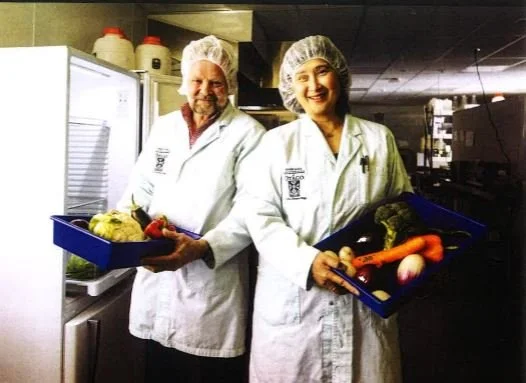
While humidity is one of the key factors affecting the shelf life of refrigerated fruits and vegetables, the primary way refrigerators enhance food safety and shelf life is through the impact of low temperatures on microbial growth. This is where Otago’s laboratory work is particularly valuable – identifying which Professors Phil Bremer and Indrawati Oey have spent over a decade creating and validating the food preservation and storage standards, across a wide range of measurements. microorganisms thrive under low-temperature conditions, and tracking changes in microbial populations, food quality and safety over time.
Once they have developed a proposed standard, it then needs to go through a set of processes with the IEC.
Bremer first began collaborating with Fisher and Paykel in 2008, working on the ability of dishwashers to eliminate food residues and bacteria.
“So, we help in the validation of new products and for standard setting,” he says.
“There are different refrigeration technologies in the market which claim to reduce microbial growth using UV or blue light, plasma or photocatalysts. As part of our ongoing testing, we have examined these technologies and their efficacy in food preservation.”
Macready says the Otago researchers are invaluable not only for their expertise but also for their laboratory facilities, which enable tests that Fisher and Paykel would otherwise be unable to perform.
While Fisher and Paykel has an in-house team with backgrounds in food science, nutrition and food technology, Macready notes that entering the global arena with the backing of Oey and Bremer – both highly respected internationally – has empowered them to lead the development of these international standards.
“We’ve been able to represent the company at a level we wouldn’t have been able to had we not had them behind us. “The discussions get really technical, and it has been invaluable to have Indra there to help us represent our thinking.”
MARK WRIGHT, published in He Kitenga 2025: University of Otago Research Highlights