
Waste Less, Care More Toolkit Launches
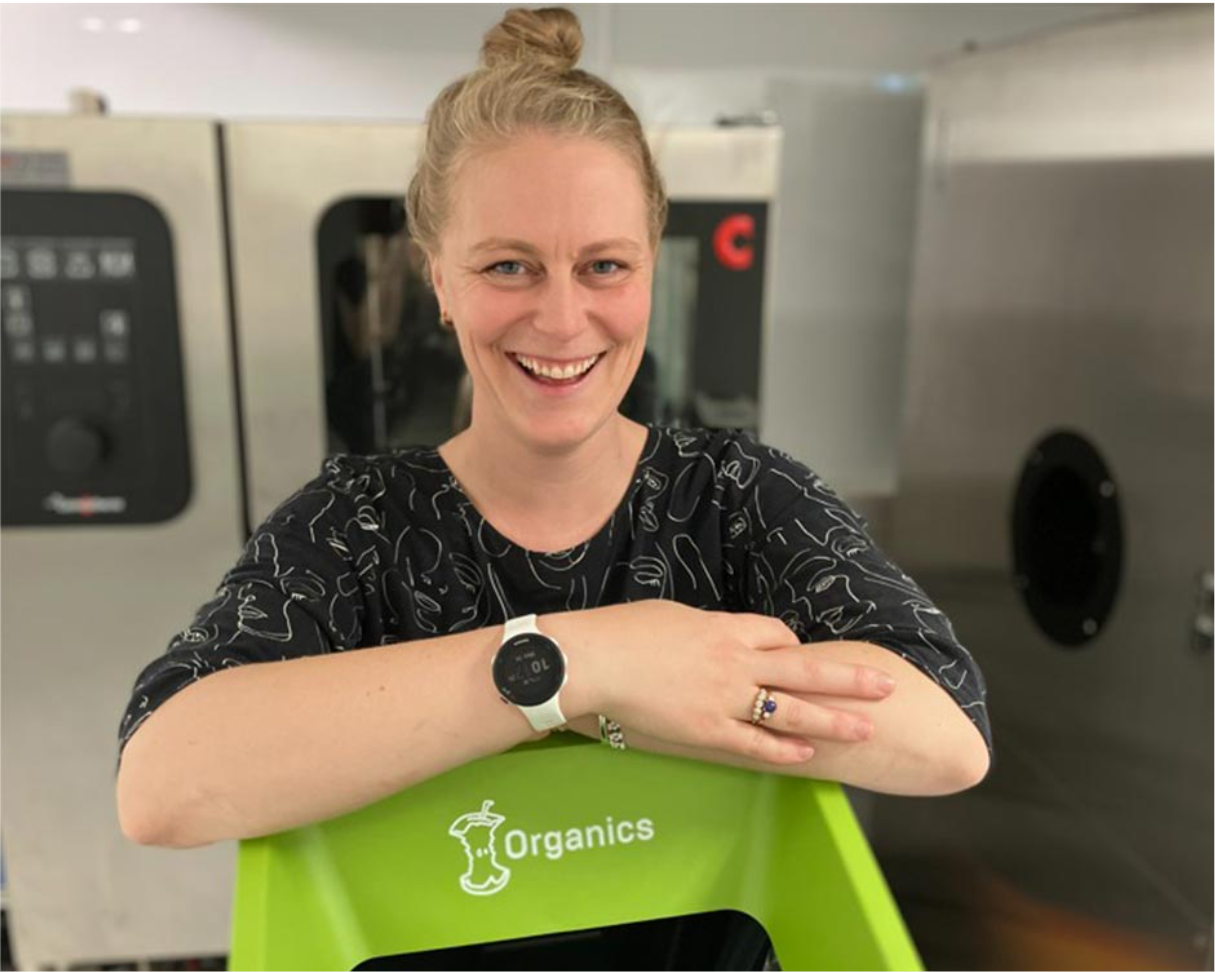
Elena Piere is deploying her Commerce degrees for the good of the planet via a PhD in Food Science – through the lens of Management. “It’s a huge joke in my family that I have two business degrees. I was the arty one. When I went home in my late 20s and told them I was enrolling in a BCom, they actually laughed.”
Commerce graduate and current PhD candidate Elena Piere can now say she had a hand in preventing 13.1 tonnes of food waste from hitting New Zealand landfills last year. For the tonnes-challenged, that looks something like 77,000 single-serve meat pies.
These methane-minimising gains resulted from a project Elena undertook with Food Waste Innovation (a University of Otago Research Theme) as part of her doctoral research.
Having only just finished a Master of Sustainable Business, Elena had been banking on some time away from the desk. But this project called loudly to her.
“It was an established government-funded project with a stipend and really involved with industry. It was too good an opportunity to turn down.”
Funded by the Ministry for the Environment | Manatū Mō Te Taiao, the project’s goal was to reduce food waste within aged care by 10% through the introduction of a practical resource.
Given that every aged care home resident averages about 123 kg of food waste per year in New Zealand, the financial, operational, and environmental costs are huge.
Elena says, “While123 kg of food waste might not sound like much, it’s roughly 500 meals.”
With industry support from the Retirement Villages Association New Zealand, Elena co-designed the Waste Less, Care More toolkit with aged care providers and piloted it across 14 facilities throughout Aotearoa before sector-wide release.
It was a triumph. Not only did those participating sites meet that 10% figure – they smashed it. Between April and December 2025 those 14 care homes reduced food waste by an impressive average of 25%. They also reported improvements in resident satisfaction, staff workflows, teamwork, and sustainability awareness.
It was a hugely gratifying result for Elena and her team, which consists of four PhD supervisors across three different disciplines – Professor Miranda Mirosa, Food Waste Innovation Team Lead (Department of Food Science), Professor Sheila Skeaff and Dr Sara Styles (both from the Department of Human Nutrition) and Associate Professor Paula O’Kane (Department of Management) – with project management support from Food Waste Innovation Key Researcher and dietician Margaret Thorsen.
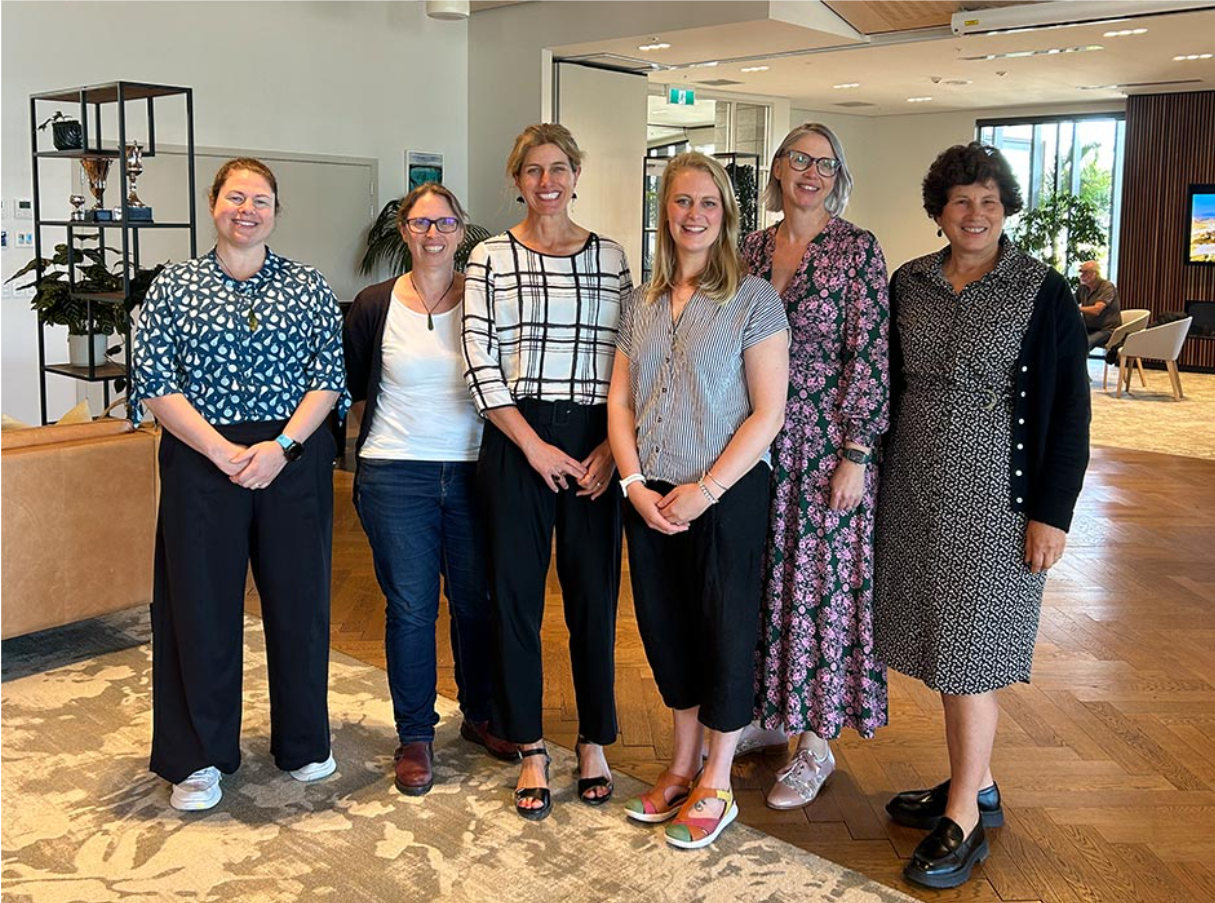
The Waste Less, Care More toolkit crew are, from left, Dr Sara Styles, Margaret Thorsen, Professor Miranda Mirosa, Elena Piere, Associate Professor Paula O’Kane and Professor Sheila Skeaff.
Elena says the pilot study demonstrated the value of using food waste data and behaviour science to co-design practical solutions which support both sustainability and resident wellbeing.
“Most research to date has focused on measuring food waste or assessing it from a nutritional lens – without asking why it’s happening or how we might reduce it in meaningful ways. What’s been missing is insight into the behaviours, routines, and systems that contribute to food waste at both an individual and an organisational level, and how these might be shifted through context-appropriate interventions.”
To better understand how and where food was being wasted, Elena interviewed managers across a range of areas – kitchen, village care, food service, sustainability – as well as dieticians and aged care residents.
Her supervisors think she excelled at managing such a diverse range of voices.
“Elena’s strength lies in her diplomacy”, says Miranda.
“Navigating the conflicting demands of such a vast web of stakeholders is rare at the PhD level. She hasn’t just studied the system; she’s mastered the art of working within its complexities to ensure her research translates into immediate, on-the-ground change.”
Once the food waste audits were assessed, Elena held workshops with stakeholders to gather their suggestions. From a vast pool of 154 ideas, she chose 28 of the most achievable "interventions" for the toolkit – things like providing photographs of meal items with the menu, allowing residents to select a desired portion size, and including a weekly "resident’s choice" meal. This consultative approach was crucial to the project’s success.
“When it came to the implementation of the toolkit, frontline staff saw things that they’d identified so they were like, oh, awesome. Also, some of those who were really reluctant at the start, are now championing it and saying how much of a difference it’s making. The way they talk about it indicates real workplace culture change. It’s so cool to hear that.”
With the toolkit now officially launched, Elena is free to get cracking on the rest of her PhD, which focuses on the methodologies around behaviour change and what that looks like within organisations. She’s found this area of research fascinating.
“It’s made me push back on that neoliberal idea that it all comes down to the individual. I think what has come to the fore for me is that it requires our organisations to change the systems within which people work.”
Though Elena is relishing her foray into Food Science and Human Nutrition, she says her compass is still fixed on Management. She loves its broad scope and its transformative potential.
“We’re living in a time of huge unrest and change, so we need businesses that are paying attention and reacting to climate change and moving forward. We need to build systems that serve people – and the planet – better.
“I may have a BCom – but I don’t have a BCom in ‘business as usual’.”
– Kōrero by Claire Finlayson, Communications Adviser (Otago Business School)